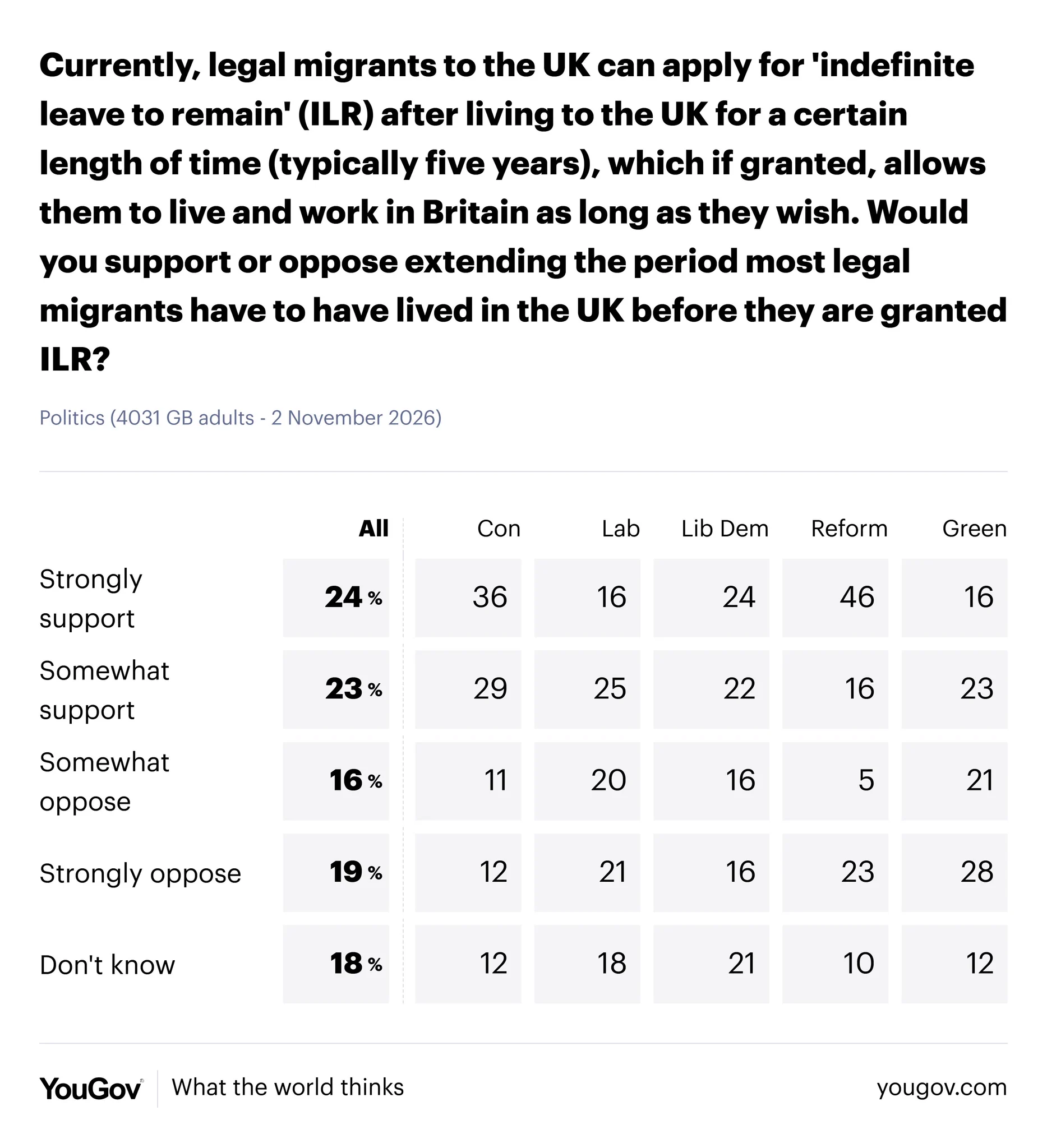
The UK's immigration policy is once again at the forefront of public debate, as a YouGov poll highlights Britons' divided opinions on extending the period legal migrants must live in the UK before being granted indefinite leave to remain (ILR). The poll, which comes in the wake of Shabana Mahmood's announcement that lower-earning migrants will now face a 10-year wait for ILR, shows 47% of Britons support the change, while 35% oppose it. This shift has sparked discussions about its impact on care workers, families, and the broader immigration landscape.
Care Workers in the Crosshairs
One of the most contentious aspects of the policy change is its potential effect on care workers. Originally, the policy was intended to address labor shortages in the care sector, but exemptions and loopholes have left many questioning its effectiveness. As one observer noted, 'They're just trying to sound tough while giving out exemptions so not much will actually be impacted.'
Care workers, who often come to the UK on visas tied to their employment, may be disproportionately affected by the extended wait times. Some argue that granting ILR sooner would allow these workers to leave care roles, which they often take on as a visa requirement rather than a long-term career choice. 'Granting ILR is going to make it more likely they'll stop being care workers,' one commenter pointed out, highlighting the tension between immigration policy and labor needs.
Families Caught in the Middle
The policy change also has significant implications for families, particularly those with immigrant partners. One individual shared their frustration: 'She’s kind, law abiding, working in a research role for the NHS, adds far more to this country than I ever could... All these maximalist positions and grandstanding statements do nowt but cause us stress and kneecap decent folks' futures.'
For many, the struggle lies in navigating the transition from graduate visas to skilled worker visas, with none of the time spent in the UK counting toward ILR. 'The transition from the graduate visa to the skilled worker visa is killing us,' they added, underscoring the personal toll of these policy shifts.
Political Strategies and Public Nuance
While some politicians advocate for stricter immigration measures, the poll suggests the public's views are more nuanced. 'Lots of people think migration is one of the biggest issues facing the country. That doesn't mean that those same people all agree on how to solve issues around migration,' one commenter observed.
The data reveals that 43% of Britons believe the changes should only apply to new migrants, while 37% think they should also apply to those already in the UK. This division highlights the complexity of public opinion, with '20% of votes [being] inconclusive,' as one person pointed out, adding a layer of uncertainty to the debate.
The Role of Citizenship
Beyond ILR, the conversation extends to citizenship, with some arguing that the current one-year timeline after ILR is too short. 'The real issue... is citizenship then being a perfunctory 1-year checkbox once you've attained ILR,' one commenter suggested, proposing a longer timeline or additional criteria to make citizenship harder to attain.
This distinction between living in the UK and becoming part of it resonates with many, reflecting a desire for policies that differentiate between temporary residency and long-term integration.
Conclusion
The debate over extending ILR wait times in the UK is far from settled, with public opinion reflecting a mix of support, opposition, and uncertainty. As policymakers navigate this complex issue, the impact on care workers, families, and the broader immigration system will remain a central concern. While some advocate for stricter measures, others emphasize the need for nuance and fairness, ensuring that those who contribute to the UK are not unfairly penalized. As one commenter aptly put it, 'You take in loads of immigrants, some of them are going to get with Scots/Brits. We like it here and want to stay.'
